The road to recovery is often characterized by internal noise. For individuals struggling with substance use, the mind is rarely a quiet place; it is frequently a theater of racing thoughts, intrusive cravings, and the heavy static of past trauma. In the traditional clinical landscape, we have long relied on the “top-down” approach of talk therapy to address these issues. However, at Nu Dai Wellness in Mission Viejo, we recognize that true healing requires a “bottom-up” physiological reset. This is where the clinical application of sound bath therapy enters the recovery space. By utilizing specific sound frequencies to interact with the human nervous system, we can bypass the cognitive barriers of addiction and reach the body’s internal regulation centers. This guide explores how frequency-based healing serves as a powerful, non-invasive modality for those looking to silence the noise and find a baseline of calm in early sobriety.
What is a Sound Bath and How Does it Support Clinical Recovery?
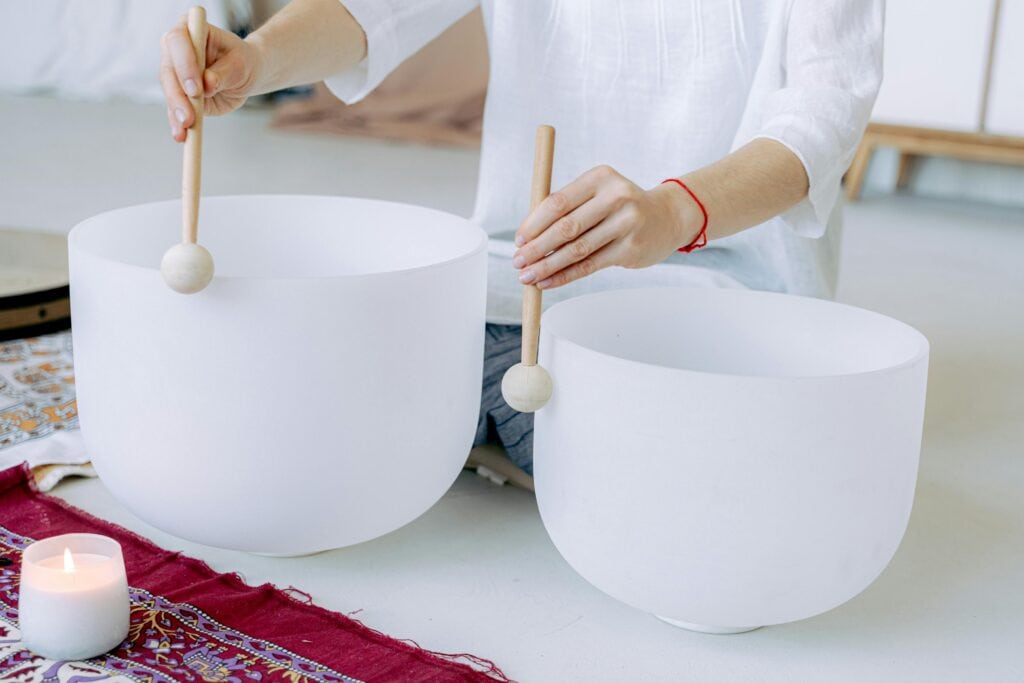
To the uninitiated, a sound bath might sound like a passive relaxation exercise, but in a residential addiction treatment setting, it is a structured, regulation-based modality. A sound bath is an immersive experience where participants are “bathed” in sound waves produced by intentional instruments like quartz crystal singing bowls, gongs, Tibetan brass bowls, and chimes. Unlike a concert, where the goal is entertainment, a sound bath focuses on frequency and resonance.
The primary goal of a sound bath in addiction treatment is nervous system stabilization. Substance use fundamentally disrupts the body’s stress response system, leaving individuals in a state of chronic hyperarousal or emotional instability. By exposing the body to controlled, rhythmic sound frequencies, we encourage the nervous system to shift from a “fight or flight” sympathetic state into a “rest and digest” parasympathetic state. At Nu Dai Wellness, these sessions are not just about “feeling good”; they are intentional clinical tools used to support stress reduction and emotional stabilization during the most vulnerable phases of recovery.
Ready to silence the noise of addiction? Reach out to the specialists at Nu Dai Wellness now for a confidential assessment and discover how frequency therapy can support your journey to lasting sobriety.
The Science of Sound: How Frequency Impacts the Nervous System
Sound is not just something we hear with our ears; it is a physical vibration that every cell in our body perceives. This is the principle of resonance. Every organ and system in the human body has a natural resonant frequency. Chronic substance use acts as a “dissonant” force, throwing these natural frequencies out of balance. Sound bath therapy works on the principle of sonic entrainment. Entrainment is a phenomenon in physics where two vibrating objects will eventually synchronize their rhythms.
During a sound bath, the brain and body begin to synchronize with the steady, harmonious frequencies of the singing bowls. This is particularly effective for individuals in recovery whose internal rhythms have been shattered by the chaos of addiction. By providing a stable, external frequency, we help the guest’s internal systems “re-tune” themselves. This leads to a reduction in heart rate, a lowering of blood pressure, and a measurable decrease in cortisol levels—the primary stress hormone that often triggers the urge to use.
You Might Also Enjoy: 5 Ways DBT Therapy Improves Emotion Regulation
Shifting Brainwaves: From High-Alert Beta to Restorative Theta
One of the most profound benefits of sound bath therapy for addiction is its ability to facilitate brainwave entrainment. Most people operating in a high-stress, addictive cycle are stuck in “High Beta” brainwave states. This is the state of hyper-vigilance, anxiety, and analytical thought. It is an exhausting state for the brain to maintain, and it is the exact state that most people are trying to escape when they reach for a substance.
Through the use of sustained frequencies and binaural beats created by the bowls, a sound bath encourages the brain to drop into Alpha and Theta states. Alpha waves are associated with relaxed wakefulness and the “flow state.” Theta waves are even deeper, associated with the threshold of sleep, deep meditation, and the REM state where the brain processes emotional information and heals. For someone in recovery, reaching a Theta state without the use of drugs or alcohol is a revelation. it teaches the brain that it is capable of achieving deep peace and emotional regulation on its own. This shift is a vital component of neuroplasticity, helping the brain forge new pathways that are not reliant on external chemicals.
Addressing the Biology of Cravings with Sound Frequencies
A craving is not just a thought; it is a physical event. It manifests as a tightening in the chest, a racing heart, and a surge of adrenaline. If a person does not have the tools to regulate this physical response, they will almost inevitably react to it. Sound bath therapy provides a unique form of distress tolerance training. During a session, a guest may experience a moment of discomfort or a sudden thought of their substance. However, the surrounding environment of calming frequencies provides a “buffer” that helps them stay present.
The frequencies produced during a sound bath—particularly the 528 Hz frequency, often referred to as the “Love Frequency”—are believed to support cellular repair and reduce the physiological markers of stress. By lowering the “volume” of the body’s alarm system, sound baths reduce the intensity of cravings. When the body is in a state of deep vibrational relaxation, the primitive “survival” part of the brain (the amygdala) calms down, allowing the prefrontal cortex to regain control. This gives the individual the “pause” they need to choose a healthy coping mechanism instead of an impulsive reaction.
Sound Baths as a Tool for Vagus Nerve Stimulation
The vagus nerve is the primary highway of the parasympathetic nervous system, running from the brainstem all the way down to the abdomen. It is the body’s “off-switch” for stress. Many people with long-term addiction have “low vagal tone,” meaning their body has lost the ability to calm itself down effectively after a stressful event.
Sound therapy, especially the deep, resonant vibrations of a gong or a large crystal bowl, provides direct stimulation to the vagus nerve through the ears and the skin. This stimulation triggers a relaxation response that is almost immediate. At Nu Dai Wellness in Mission Viejo, we use sound baths to “exercise” the vagus nerve, helping guests rebuild their baseline regulation capacity. This makes them more resilient to the daily frustrations and emotional triggers that occur during residential treatment and beyond.
Building Distress Tolerance Through Intentional Stillness
Recovery requires the ability to tolerate discomfort without an impulsive reaction. In a sound bath session, guests are asked to practice intentional stillness. For someone whose life has been a blur of activity and substance-seeking, sitting still for 45 minutes can be a challenge. However, the sound provides a focus point. It gives the mind something to “hold onto” while the body learns to be still.
This practice strengthens the same mental muscles used in Dialectical Behavior Therapy (DBT). By practicing awareness of the sounds and the sensations in their body, guests develop the capacity to “be” with themselves without the need for an escape. This is a crucial skill for relapse prevention. If you can sit through a challenging emotional wave in a sound bath, you can sit through a difficult conversation or a stressful day without reaching for a bottle or a pill.
You Might Also Enjoy: How CBT Therapy Rewires the Brain for Sobriety
How Nu Dai Wellness Integrates Sound with Other Holistic Modalities
At Nu Dai Wellness, we believe in a multidisciplinary approach to nervous system regulation. While sound baths are a cornerstone of our program, they are integrated into a broader ecosystem of healing. We don’t just use one tool; we use a diverse array of therapies to reach the guest from every possible angle.
For instance, we utilize Cold Plunge and Sauna Therapy to build hormetic stress resilience. While the cold plunge teaches the body to handle sudden “shocks,” the sound bath teaches the body to find deep, restorative peace. We also offer Adventure Therapy, which gets guests out of their heads and into their bodies through physical action in the beautiful landscapes of Orange County. For those seeking energetic balance, we provide Reiki, a gentle form of energy healing that complements the vibrational work of the sound bath.
Furthermore, sound therapy is always coordinated alongside our Meditation and Mindfulness tracks. While meditation provides the cognitive framework for awareness, the sound bath provides the physiological support to make that awareness possible. We also integrate these holistic tools with evidence-based practices like CBT and DBT, ensuring that the insights gained during a sound bath are translated into actionable behavioral changes.
You deserve a treatment plan that addresses the body, mind, and spirit. Contact Nu Dai Wellness today to learn how our sound bath therapy and holistic programs can help you find your baseline of calm.
Who Benefits Most from Sound Bath Therapy in Mission Viejo?
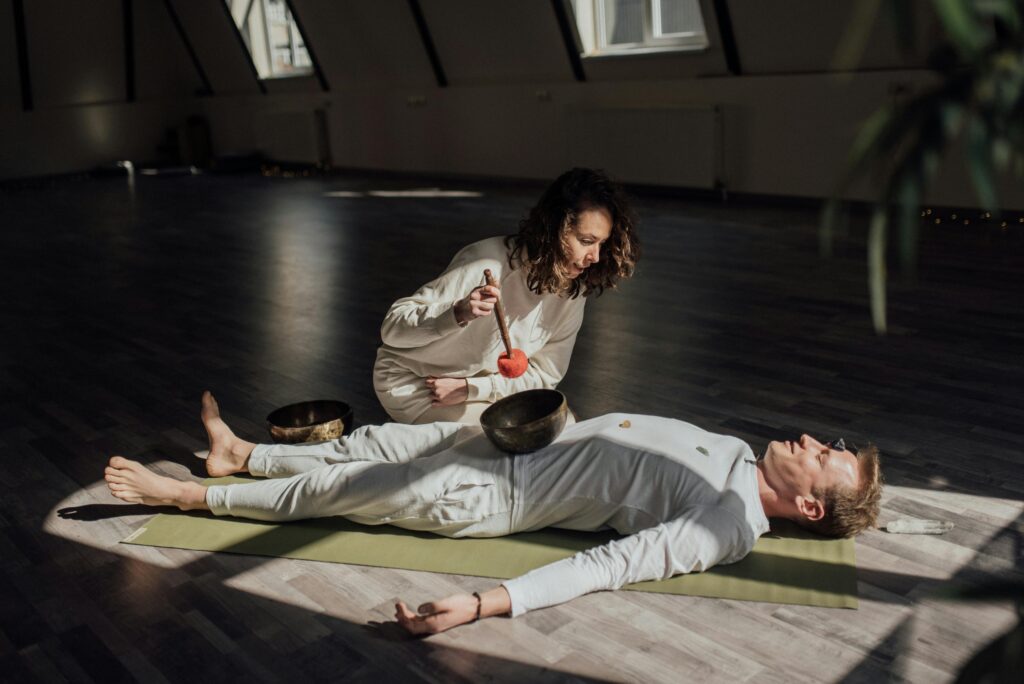
Sound therapy is a highly inclusive modality, but it is particularly beneficial for certain types of individuals in the recovery community. Because it is a “passive” form of regulation—meaning the guest simply has to lay down and receive the sound—it is excellent for those who are “talk-therapy resistant.” Some individuals find the constant “processing” of emotions in groups to be overstimulating. A sound bath offers them a way to heal without having to find the right words.
It is also an essential tool for those who:
- Experience chronic insomnia or sleep disruption common in early sobriety.
- Struggle with “racing thoughts” and high-functioning anxiety.
- Feel “disconnected” from their physical bodies due to years of substance use.
- Are dealing with suppressed trauma that makes traditional meditation difficult.
- Need a structured way to reduce physiological hyperarousal.
What a Sound Bath Session Looks Like at Nu Dai Wellness
Within our boutique residential program, sound bath sessions are structured and guided. They are not simply “nap time”; they are clinical sessions with a clear arc. A session typically begins with guided breathing exercises or body scanning techniques to help the guest settle into their space. This is followed by exposure to controlled sound frequencies, where the practitioner carefully selects bowls and gongs to create a specific “frequency landscape.”
As the sounds wash over the group, the practitioner may guide the guests through grounding techniques to keep them present in their bodies. The session concludes with a period of silence to allow the brain to integrate the experience, followed by reflection and emotional processing. Because our program is intentionally small, our clinicians can observe how each client responds to the frequencies and integrate those insights into their broader treatment plan.
Promoting Nu Dai Wellness: Your Sanctuary for Healing in Orange County
At Nu Dai Wellness, we are dedicated to providing a high-quality, boutique residential experience for those seeking lasting recovery. Our facility in Mission Viejo is more than just a rehab; it is a sanctuary designed for physiological and psychological transformation. We understand that addiction is a multifaceted disease, and our mission is to provide you with the most advanced, holistic tools available to fight it.
We take pride in our “whole-person” approach, which combines top-tier clinical therapy with innovative regulation modalities like sound baths, cold plunges, and adventure therapy. Our staff is committed to your comfort, your safety, and your long-term success. Because we maintain a small client-to-staff ratio, you are never just a number at Nu Dai. You are a member of a community, and your treatment plan is as unique as your story.
Take the First Step Toward Harmony
If you are tired of the internal noise and ready to find your baseline of calm, we are here to guide you. At Nu Dai Wellness, we believe that frequency therapy can be the bridge to a life beyond addiction. Contact us today at (949) 775-3487 to speak with our admissions team. We can help you find out if your insurance will cover the cost of your stay and discuss how our Mission Viejo program can help you find the peace you’ve been searching for.
Silence the Addiction, Start the Healing
You don’t have to live in a state of constant agitation. Reach out to the specialists at Nu Dai Wellness now for a confidential assessment. Discover how the science of sound and the comfort of our boutique residential program can support your journey to lasting sobriety. Your new life—filled with clarity, focus, and genuine peace—is waiting for you. Let us help you find the frequency of your own recovery.
Frequently Asked Questions About Sound Baths and Addiction
Is sound bath therapy scientifically proven?
Yes. Studies in the field of vibroacoustic therapy and brainwave entrainment have shown that sound frequencies can measibly reduce stress, lower blood pressure, and shift brainwave states from Beta (active/anxious) to Alpha and Theta (relaxed/meditative). It is an established field of study used in various medical and psychological settings.
Do I need to be good at meditation to enjoy a sound bath?
Not at all. One of the best things about a sound bath is that it is a “passive” modality. Unlike traditional meditation, which requires active mental effort to stay focused, the sound bowls do the work for you by “pulling” your brain into a relaxed state. It is an excellent “entry point” for those who find meditation difficult.
Can a sound bath trigger a relapse or a craving?
While the goal is relaxation, sometimes deep emotional processing can occur during a sound bath. This is why we perform these sessions in a structured, clinically supervised residential environment. If a guest feels overwhelmed, our therapists are on-site to help them process those emotions and ground themselves.
How often should I participate in sound therapy?
While even a single session can provide an immediate sense of relief, the long-term benefits for nervous system regulation are cumulative. In our Mission Viejo program, sound baths are integrated as a regular part of the weekly therapeutic schedule to support consistent stabilization.
What should I wear to a sound bath session?
Comfort is key. We recommend loose, comfortable clothing and perhaps a light blanket. The goal is to be as relaxed as possible so your body can fully receive the vibrations of the instruments.
Is sound therapy a replacement for traditional rehab?
No. At Nu Dai Wellness, sound bath therapy is a “complementary modality.” It is used alongside traditional medical detox, individual therapy, and group sessions. It enhances the effectiveness of these other treatments by keeping the patient’s nervous system in a state where they are more receptive to change.
How does sound therapy help with sleep in recovery?
Many people in early recovery struggle with “circadian rhythm” disruption. By dropping the brain into the Theta state—the same state we enter just before sleep—sound baths help “re-train” the brain on how to enter a restorative sleep cycle naturally, without the need for sedatives.
Medically Reviewed by Marco Ramirez, LVN.
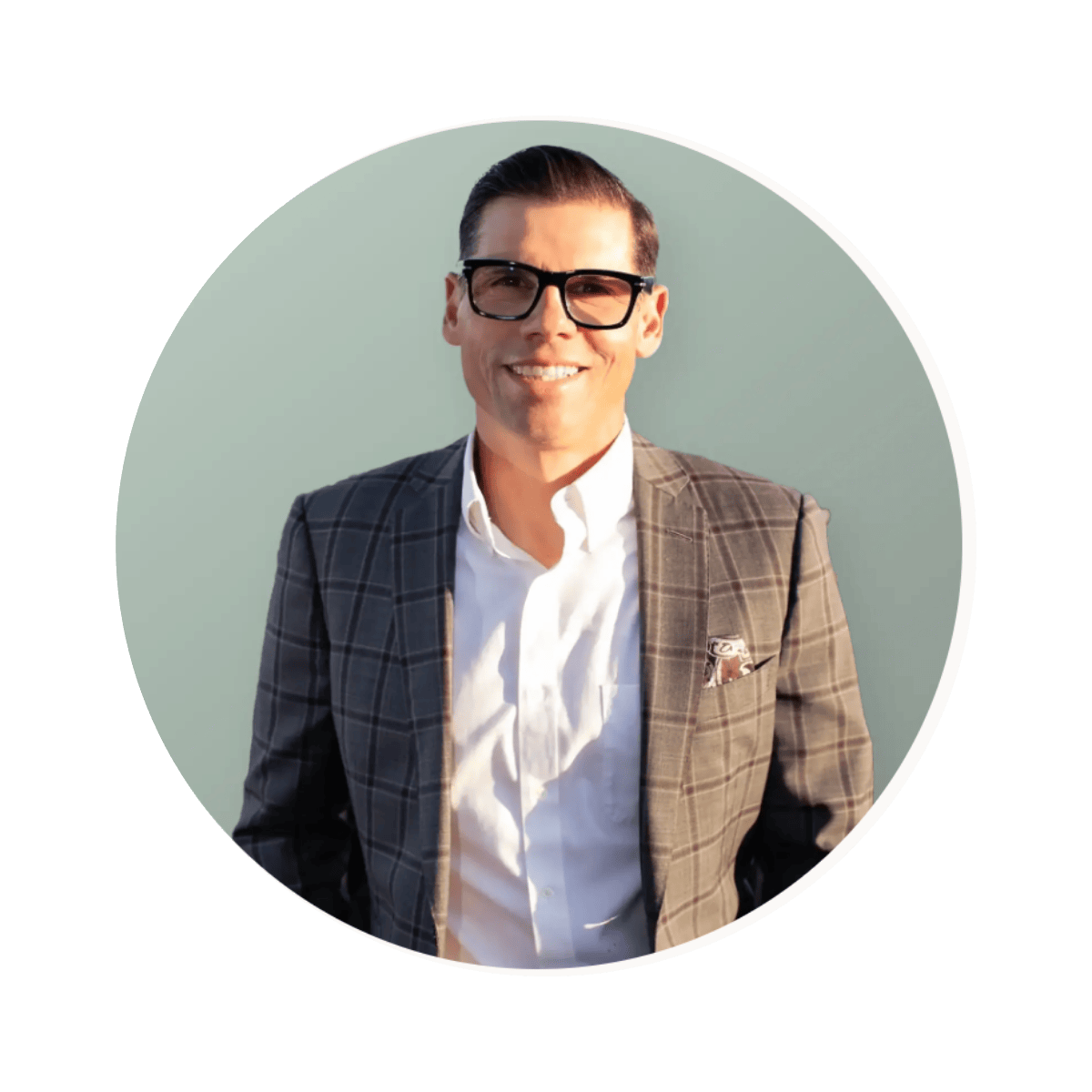
Marco Ramirez serves as the Program Director and Nurse at Nu Dai Wellness, bringing nearly two decades of diverse experience in the substance abuse and mental health fields. Marco has held every role from frontline support staff to Executive Director, providing him with a profound, 360-degree understanding of the recovery journey. His clinical approach integrates a strong medical foundation with a personal journey in recovery, allowing him to deliver ethical, evidence-based, and holistic care that honors the mind, body, and spirit. Under his leadership, Nu Dai Wellness provides a compassionate and clinical sanctuary designed to help individuals move beyond addiction and into a life of lasting hope.